My Transformative Learning Journey

Transformation Through Learning
My journey into education was not a carefully planned career path. Rather, it emerged through a series of personal and professional experiences that challenged my assumptions, reshaped my identity, and transformed my understanding of learning. This page is not simply a record of qualifications or career milestones. It is a reflection on how education became a catalyst for personal growth, professional purpose, and teaching identity.
After losing my job in Portugal, my family and I moved to Ireland in search of new opportunities. Like many adult learners, I found myself navigating uncertainty, change, and the challenge of rebuilding a sense of purpose in an unfamiliar environment. While my family gradually settled into new routines, I often questioned where I belonged and what direction my future might take.
A seemingly ordinary moment became a turning point. Sitting at the kitchen table, I noticed my children's schoolbooks and found myself asking a simple question: If they can learn, why can't I? Looking back, this moment marked the beginning of a transformative learning journey. It was not only a decision to return to education; it was a decision to reimagine what I believed was possible for myself.
The following video represents that journey, the passion, creativity and learner-centred approach that continue to guide my teaching, learning and personal development.
Becoming an educator
Through education, I rediscovered creativity, developed confidence, and began to understand learning as a powerful tool for transformation. More importantly, these experiences helped me recognise the emotional, social, and practical challenges adult learners may face. They continue to shape how I teach, how I design learning experiences, and how I support students in recognising their own potential.
The following sketches reflect my passion for drawing and my deep emotional connection to those who are often unseen or overlooked. I have always been drawn to capturing imperfections, signs of ageing, and the unique marks that tell a person's story, celebrating the beauty and humanity found within them.
Early Creative Identity
I am passionate about drawing

From Creativity to Teaching Practice
I began my academic journey with Graphic Design Level 5, where I explored creativity, composition, and visual communication. I then progressed to Multimedia and Web Development Level 6, Computing and Digital Media at Level 7 followed by Interactive Digital Media at Level 8. Each stage expanded my confidence and helped me see that creativity could be used not only to produce visual artefacts but also to communicate knowledge, support understanding, and make learning more accessible.
During my studies, I realised that I did not want to return to a corporate environment focused only on productivity and profit. Instead, I wanted to use design, digital media, and storytelling to support learning. This realisation became central to my emerging teaching identity. I became particularly interested in video editing, animation, interactive learning, and digital storytelling as ways to present information clearly and meaningfully for diverse learners.
This passion for creativity and storytelling led me to work remotely as a video editor for Examcast, where I transformed traditional learning materials into engaging video solutions for Junior Cycle and Leaving Certificate examination papers. Through this role, I discovered how creative and technical skills can have a meaningful impact on education by making learning more accessible, engaging, and effective.
The experience inspired me to pursue a deeper understanding of teaching, learning, and instructional design. This led me to complete a Graduate Diploma in Adult and Further Education, followed by a Master's degree in E-Learning Design and Development. Together, these experiences shaped my professional identity, combining creativity, technology, and education to design meaningful learning experiences that support and empower learners.
The interactive game presented below was designed and developed as part of my Master's programme, demonstrating my ability to combine instructional design principles, multimedia development, and learner engagement strategies within a digital learning environment.
Hidden Objects - Interactive Game
STAR - Stay safe online programme
The following video illustrates how my passion for design informs my learner-centred approach.
About Me
Connecting Lived Experience with Educational Theory
Reflecting on my journey has helped me understand that educational theory is not separate from lived experience. Theories of adult learning, motivation, and transformation provide a language for understanding how personal challenges can become opportunities for growth. They also help me make sense of the values that now guide my teaching practice: empathy, autonomy, inclusion, reflection, and learner agency.
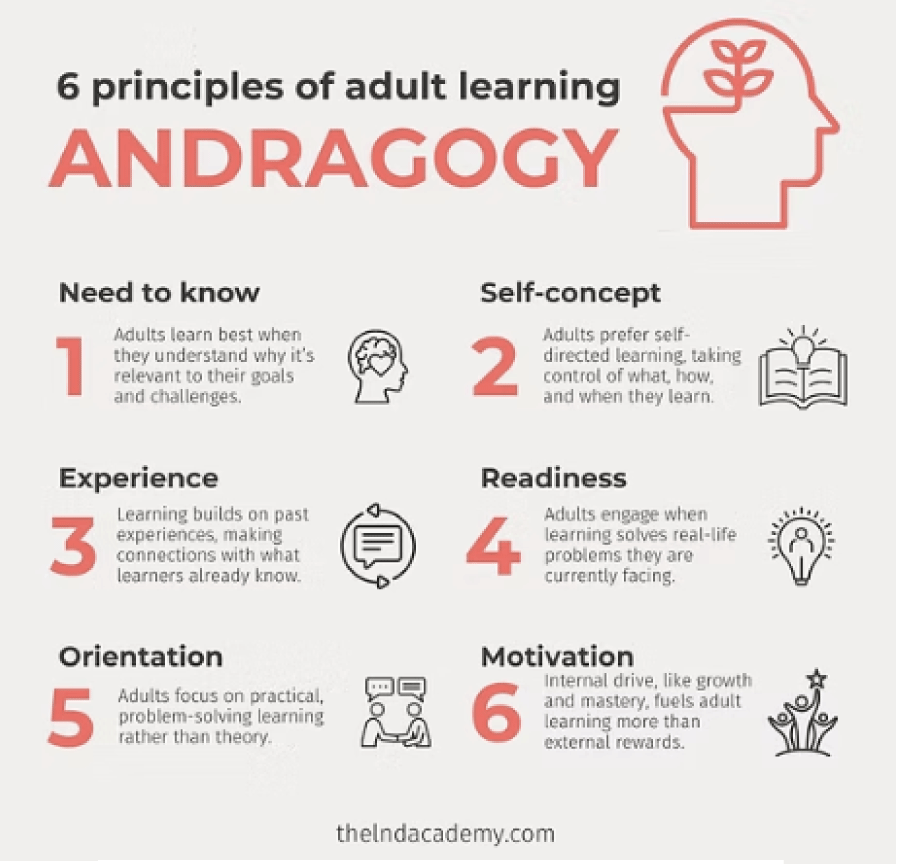
Andragogy: Learning with Purpose
My return to education reflects Knowles' principles of andragogy, particularly the idea that adult learners are self-directed, internally motivated, and shaped by their life experiences. My motivation to study was not driven by external pressure. It came from a personal need to rebuild confidence, create opportunities, and redefine my future.
This experience continues to influence my teaching. I understand that adult learners often bring complex histories, responsibilities, strengths, and uncertainties into the learning environment. As a result, I aim to design learning experiences that feel relevant, respectful, purposeful, and connected to learners' own goals.
Adult Learning Theory
Adult Education - Andragogy
Andragogy, developed by Malcolm Knowles, describes adult learners as self-directed, experience-rich, and motivated by learning that is relevant to their personal or professional lives.
References
Knowles, M. (1984) Andragogy in Action. San Francisco: Jossey-Bass.
The L&D Academy (n.d.) Andragogy – Adult Learning Theory. Available at: https://thelndacademy.com (Accessed: 23 March 2026).
Humanistic Learning: Confidence, Growth and Self-Belief
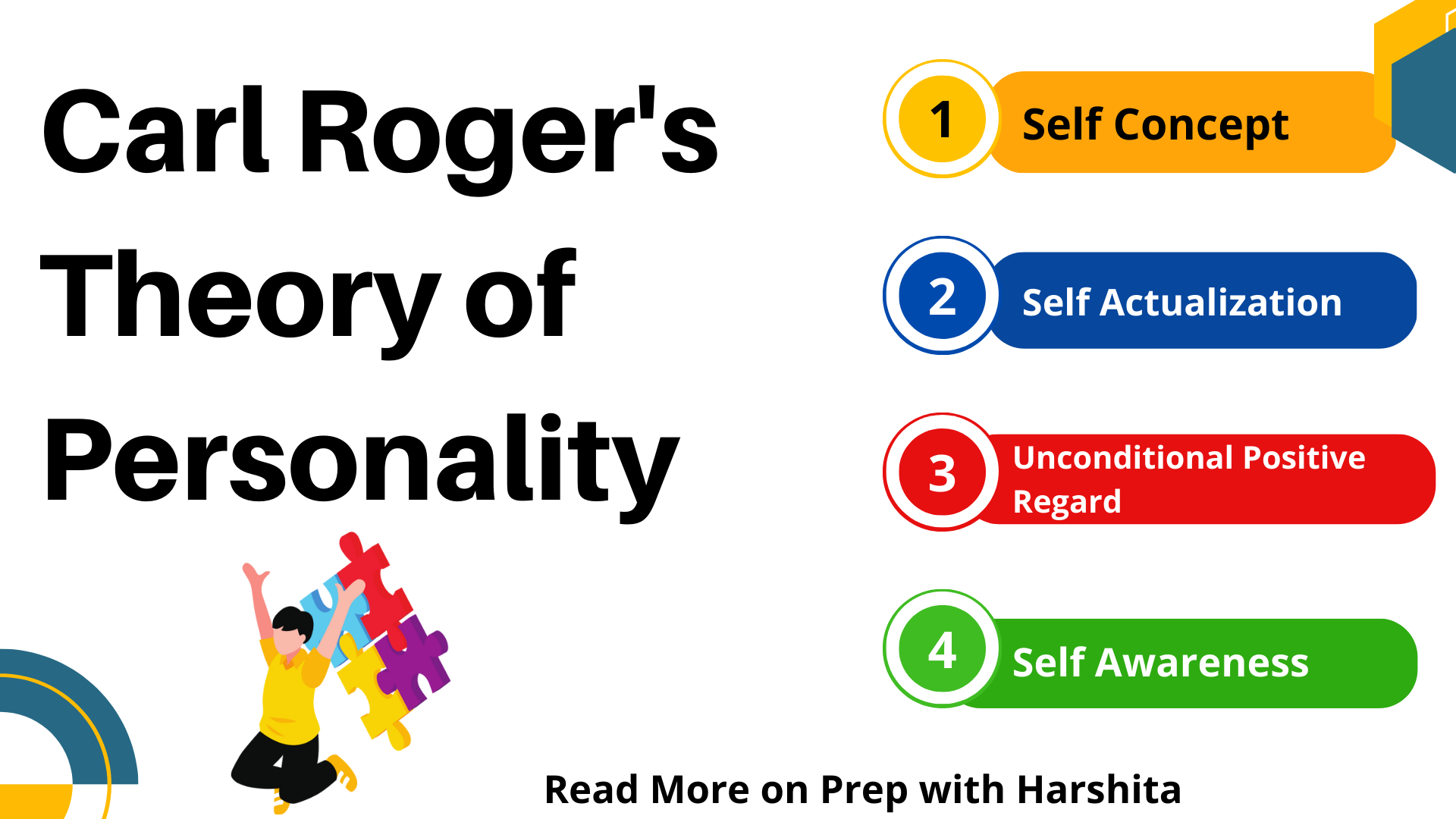
Rogers' humanistic theory helps me understand the emotional dimension of my learning journey. Returning to education was not only about gaining qualifications, it was also about rebuilding self-belief. As my skills developed, so did my confidence and sense of possibility.
This has shaped my belief that supportive learning environments matter. Learners need to feel respected, capable, and safe enough to take risks. In my own practice, I try to create learning spaces where students are encouraged to ask questions, make mistakes, revise their work, and recognise progress over time.
Humanistic Theory
Theory of Personality
Humanistic learning theories emphasise personal growth, self-awareness, and the importance of supportive environments in helping learners realise their potential.
References
Rogers, C.R. (1969) Freedom to Learn: A View of What Education Might Become. Columbus, OH: Charles Merrill.
Prep With Harshita (2023), Carl Rogers Theory of Personality. Available at: https://prepwithharshita.com (Accessed: 23 March 2026).
Self-Determination Theory: Autonomy, Competence and Relatedness
Self-Determination Theory also helps explain the motivation that sustained my learning. My journey involved Autonomy, because I chose to return to education. Competence, because each programme helped me develop new creative and technical skills; and Relatedness, because the encouragement of educators, peers, and family helped me continue.
This theory influences how I support students. I try to provide meaningful choices, scaffold confidence, and create opportunities for connection. When learners experience autonomy, competence, and belonging, they are more likely to persist and engage deeply with learning.
Maslow: Safety, Belonging and Self-Actualisation
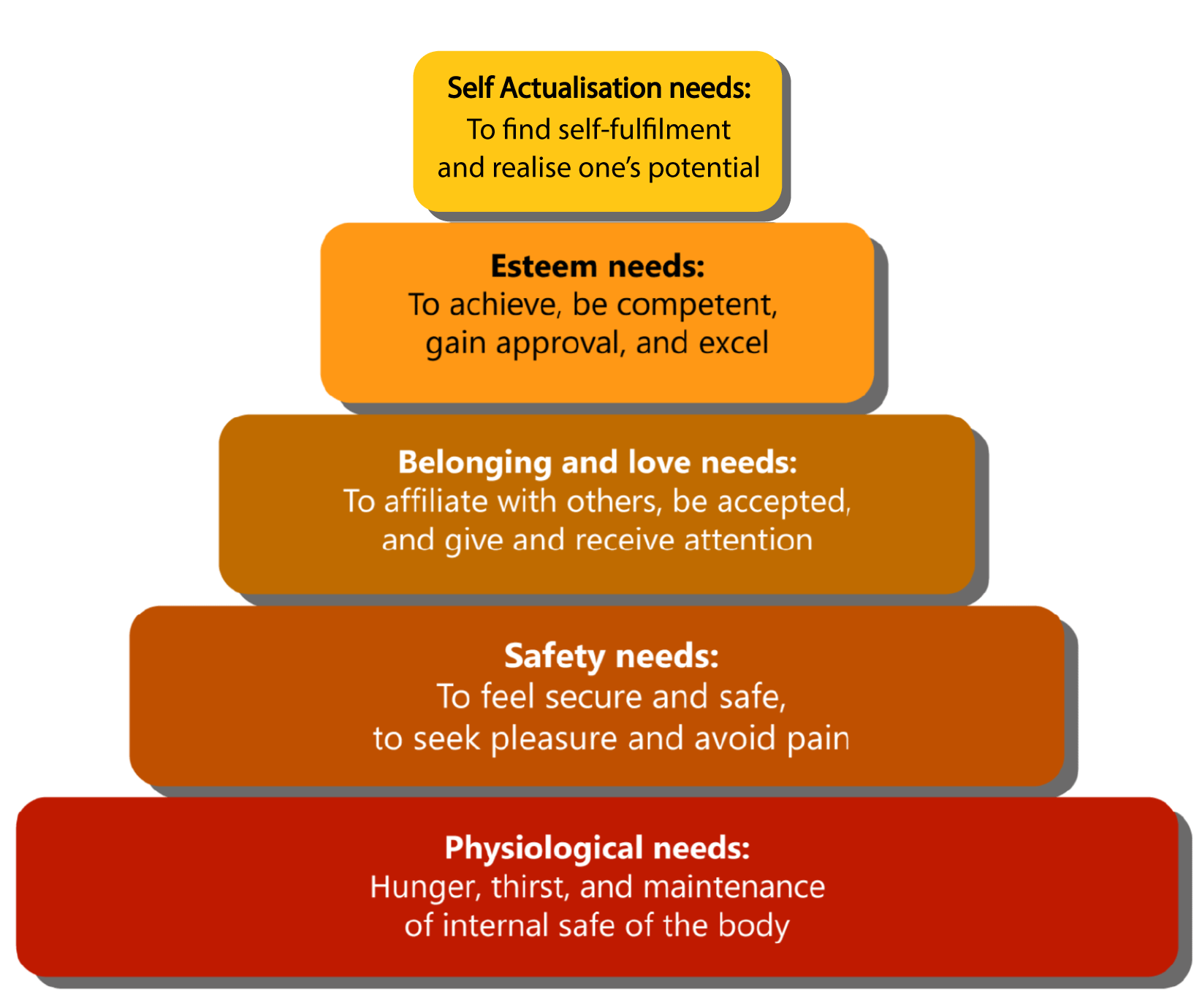
Maslow's hierarchy of needs helps me recognise that learning does not happen in isolation from personal circumstances. At the beginning of my journey, education represented stability, direction, and opportunity. Over time, it became a path toward personal growth and self-actualisation.
This perspective reminds me that students may not be able to engage fully unless they feel supported, respected, and included. In my teaching, I aim to create learning environments where students feel safe to participate and confident enough to grow.
Theory of Human Motivation
Hierarchy of Needs
Maslow's hierarchy of needs highlights the importance of safety, belonging, esteem and self-actualisation. In education, it reminds teachers that learners need supportive conditions in order to reach their potential.
References
Maslow, A. (1943) ‘A Theory of Human Motivation’, Psychological Review, 50(4), pp. 370–396.
Mezirow: Transformation Through Critical Reflection
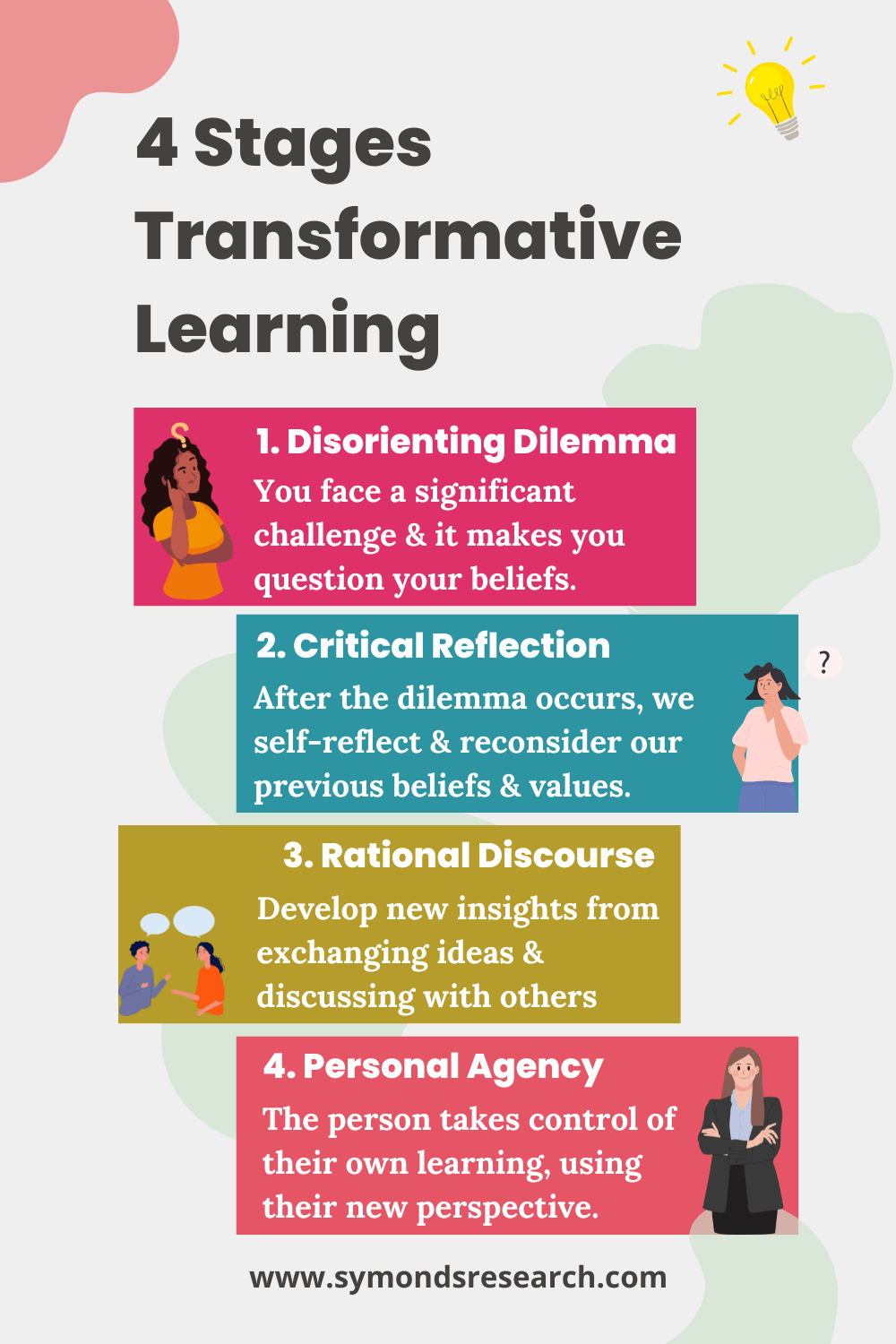
Mezirow's Transformative Learning Theory provides one of the clearest lenses through which to understand my journey. Losing my job, relocating to another country, and returning to education disrupted my assumptions about who I was and what I could become. Through critical reflection, study, and experience, I began to reconstruct my identity.
This theory is particularly meaningful to my teaching philosophy. It reminds me that transformation is not always comfortable or immediate. Learners may experience uncertainty before confidence. They may need time, dialogue, feedback, and opportunities to connect learning with their own lives. As an educator, I aim to support that process rather than focus only on final outcomes.
Mezirow's 4 Stages of Transformative Learning
Transformative Learning Theory
Transformative Learning Theory explains how adults can change their frames of reference through critical reflection, dialogue, and experience. It is especially relevant to adult learning, identity development, and personal growth.
References
Mezirow, J. (1991) Transformative Dimensions of Adult Learning. San Francisco: Jossey-Bass.
Symonds Research (2026) Transformative Learning Theory stages. Available at: https://symondsresearch.com/transformative-learning-theory-workplace/ (Accessed: 23 March 2026).
Kolb: Learning Through Experience and Reflection
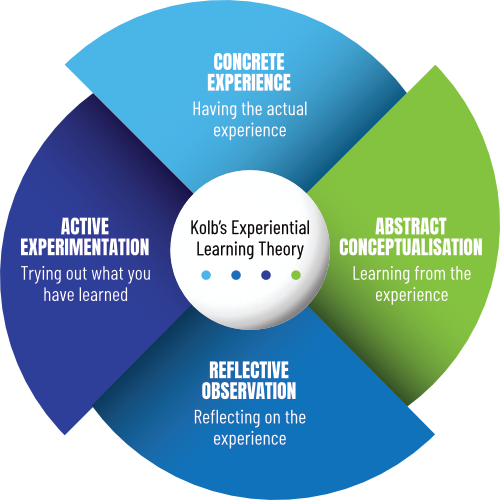
Kolb's Experiential Learning Theory also reflects my development. My learning did not happen through theory alone. It developed through experience, reflection, experimentation, and applying new ideas in practice. This cycle is visible in my journey from learner to designer, from designer to educator, and from educator to reflective practitioner.
These experiences continue to shape my Teaching Philosophy. I recognise that learning is most meaningful when students actively engage with ideas, test approaches, receive feedback, and connect new knowledge to their own experiences.
Experiential Learning Cycle
Experiential Learning Cycle
Kolb's Experiential Learning Cycle describes learning as a continuous process of experience, reflection, conceptualisation, and experimentation.
References
Kolb, D.A. (1984) Experiential Learning: Experience as the Source of Learning and Development. Englewood Cliffs, NJ: Prentice Hall.
Inclusive and Learner-Centred Teaching
My experiences as an adult learner have strengthened my commitment to inclusive and learner-centred teaching. Returning to education later in life made me more aware of the barriers students may face, including confidence, language, access, family responsibilities, and previous experiences of education.
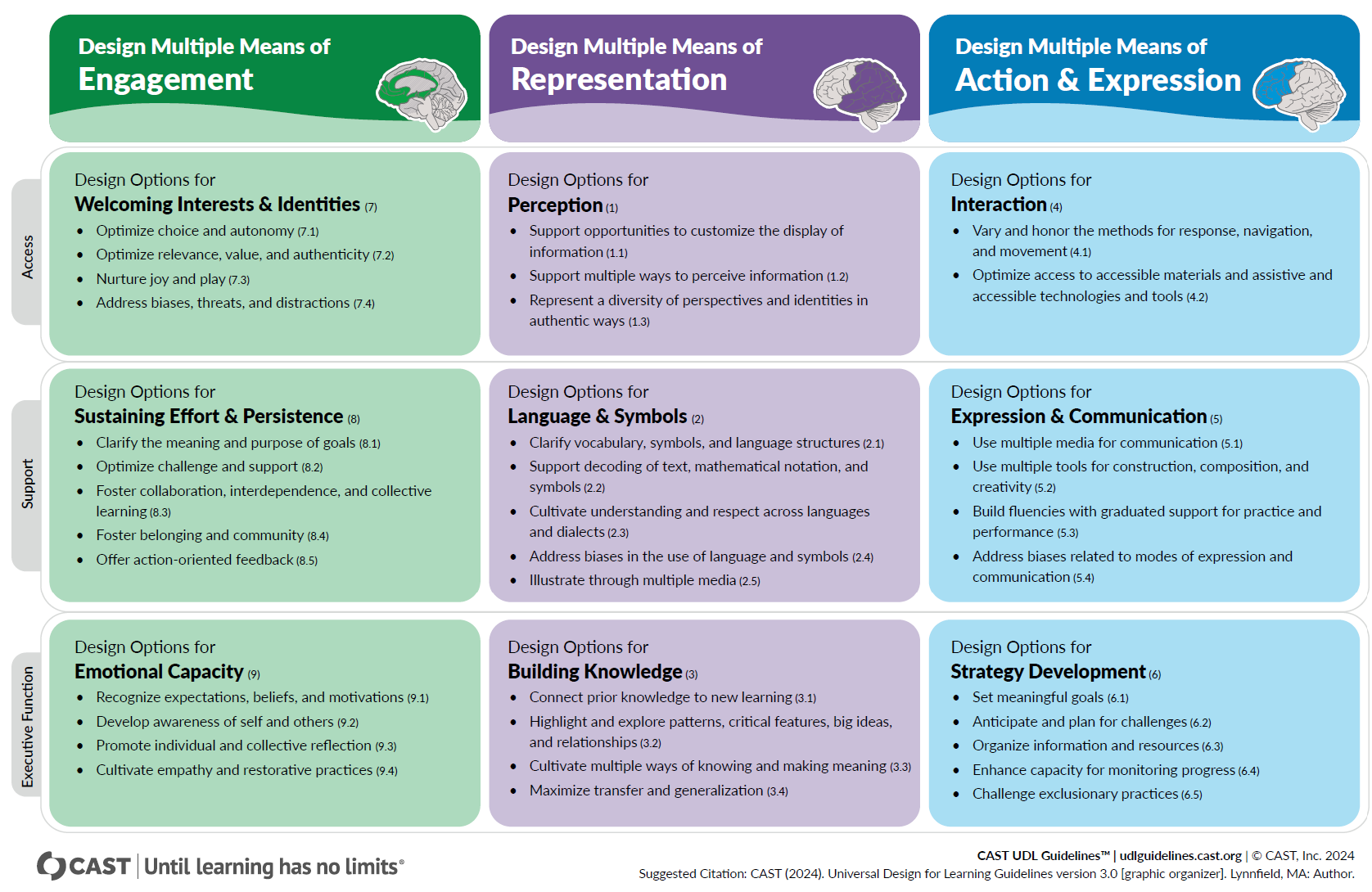
Universal Design for Learning (UDL) provides a framework that aligns strongly with this perspective. By offering multiple means of engagement, representation, and action and expression, I can design learning experiences that are more flexible, accessible, and responsive to learner diversity. For me, UDL is not an additional feature. It is part of ethical and effective teaching practice.
In practice, this means using clear instructions, varied media, captions, visual supports, flexible ways to demonstrate learning, and opportunities for feedback and revision. My own learning journey reminds me that students often need more than content; they need encouragement, structure, choice, and a sense that their progress matters.
Universal Design for Learning (UDL) Guidelines
UDL Guidelines
UDL is a framework for designing learning environments that are accessible, inclusive, challenging, and supportive of learner agency.
References
CAST UDL (2024) Universal Design for Learning Guidelines version 3.0. Available at: https://udlguidelines.cast.org (Accessed: 22 March 2026).
Engagement with the National Professional Development Framework
My development as an educator also connects with the National Professional Development Framework for all staff who teach in higher education. The framework provides a useful structure for reflecting on professional identity, values, communication, knowledge, skills, and digital capacity.
The domain of The Self is particularly relevant to my journey. My experience of migration, career disruption, and returning to education encouraged critical self-awareness and helped me clarify the values that shape my practice. These include inclusion, empathy, creativity, accessibility, and learner empowerment.
The framework also highlights the importance of professional dialogue and collaboration. Through engagement with educators, peers, academic communities, and learners, I have developed a deeper understanding of teaching and learning. This reinforces my commitment to continuous professional development and reflective practice.
Benefits of this framework and how to make best use of it can be seen below.
National Forum for the Enhancement of T&L in Higher Education
Looking Back: Distance Travelled
When I first arrived in Ireland, I could not have imagined that I would complete multiple qualifications, become a teacher, design digital learning resources, mentor creative learners, and contribute to educational projects. Looking back, I recognise that transformation was gradual. It happened through persistence, feedback, reflection, and the courage to keep learning.
This awareness influences how I view my students' progress. Growth is not always immediate or visible. Learners may need time to build confidence, understand their strengths, and recognise how far they have travelled. As a teacher, I aim to celebrate progress as well as achievement, and to create learning experiences where students can see themselves becoming more capable over time.
Conclusion
My journey from job loss to becoming an educator has reinforced my belief in the transformative power of education. Experiencing education as an adult learner has made me more empathetic, reflective, and responsive to the needs of students. I recognise that many learners face personal, social, and emotional barriers, and that supportive teaching can help them move forward with confidence.
Today, my goal as an educator is not only to share knowledge but also to empower learners to recognise their potential. By integrating adult learning theory, reflective practice, inclusive design, and digital pedagogy, I aim to create learning environments where students feel motivated, capable, autonomous, and supported.
Ultimately, the spark that began with a simple moment of curiosity while looking at my children's schoolbooks has grown into a lifelong commitment to learning and teaching. That moment marked the beginning of a journey defined by resilience, transformation, and the belief that education can change lives.
References
CAST UDL (2024) Universal Design for Learning Guidelines version 3.0. Available at: https://udlguidelines.cast.org (Accessed: 22 March 2026).
Deci, E.L. and Ryan, R.M. (1985) Intrinsic Motivation and Self-Determination in Human Behavior. New York: Plenum.
Knowles, M. (1984) The Adult Learner: A Neglected Species. 3rd edn. Houston: Gulf Publishing.
Kolb, D.A. (1984) Experiential Learning: Experience as the Source of Learning and Development. Englewood Cliffs, NJ: Prentice Hall.
Maslow, A.H. (1943) ‘A Theory of Human Motivation’, Psychological Review, 50(4), pp. 370–396.
Mezirow, J. (1991) Transformative Dimensions of Adult Learning. San Francisco: Jossey-Bass.
National Forum for the Enhancement of Teaching and Learning in Higher Education (2016) National Professional Development Framework for All Staff Who Teach in Higher Education. Dublin: National Forum.
Rogers, C.R. (1969) Freedom to Learn: A View of What Education Might Become. Columbus, OH: Charles Merrill.